110V Tankless Water Heater in Oakley, CA: What It Can Run
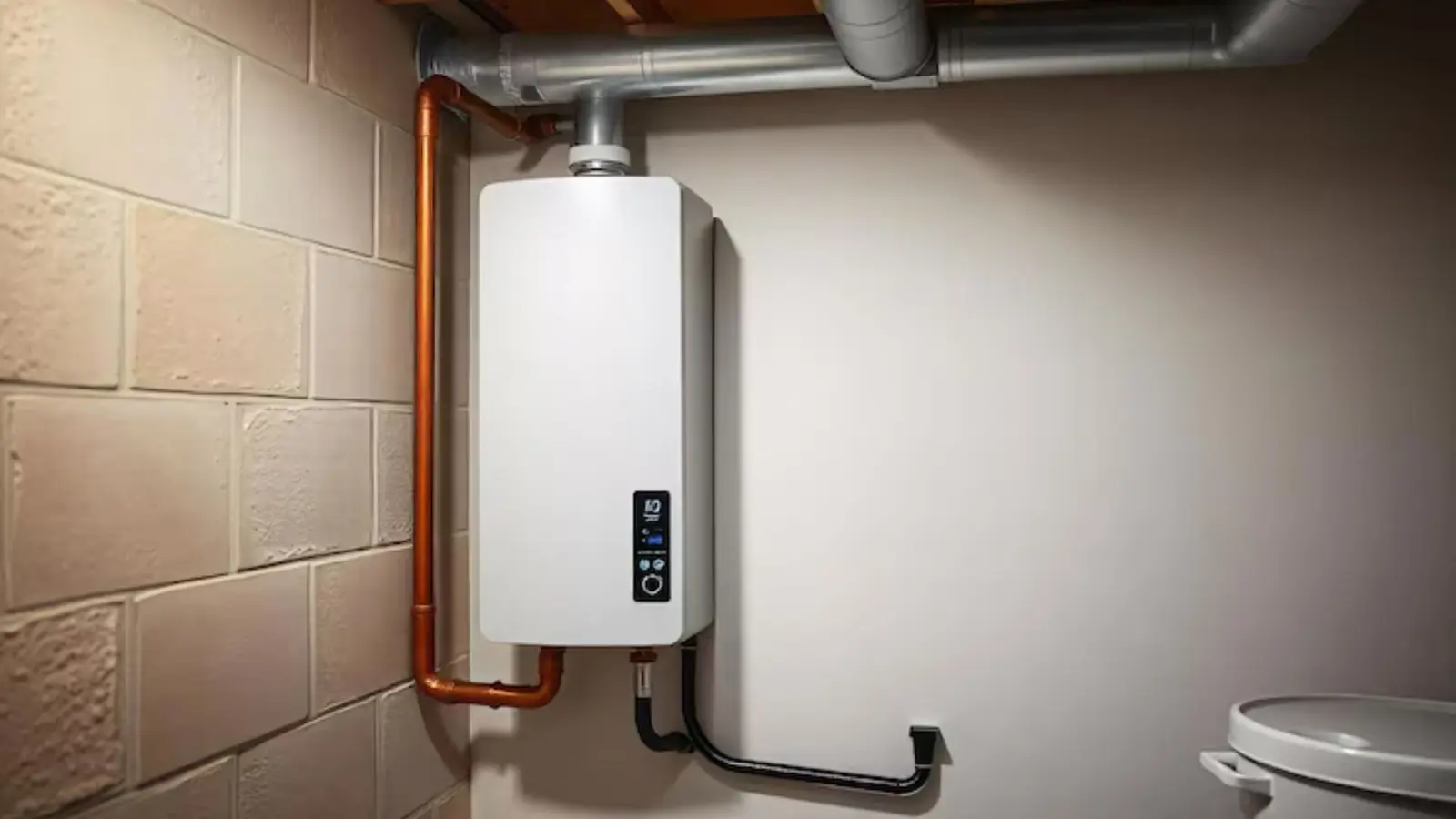
A 110V tankless water heater in Oakley, CA will work for a single handwashing sink, but it cannot heat a shower. The reason is arithmetic: a standard outlet carries only a small amount of power.
A 110V tankless heater, sold as a point-of-use or plug-in unit, warms water for one tap right where it is installed. A household outlet is limited to roughly 1,400 to 1,800 watts, so the unit can raise a trickle of water by only a modest amount.
This page explains the limits, shows which jobs suit a plug-in unit and which need 240V electric or gas, and covers what to ask before you buy.
Why a wall outlet cannot run a shower
Heating water takes energy in proportion to how much flows and how many degrees you add. A whole-house gas or 240V unit has the power to heat several gallons a minute. A plug-in model, with only a fraction of that, can lift a half-gallon per minute by roughly twenty degrees or so.
That is enough to take the chill off a sink in a detached office or a pantry. It falls far short of the temperature rise a shower needs, especially when the incoming water is cold, and the result is lukewarm water or a unit that shuts off to protect itself.
Jobs a plug-in unit does well
These small heaters earn their keep where the demand is light and short. Think of them as a convenience for one fixture, not a replacement for the water heater that serves the rest of the house.
A small unit under the sink saves the wait for hot water from the tank, where the pipe run is long.
Warm water for hand washing and soaking, with no gas or special wiring.
Places that never had a hot line, where a small trickle is enough.
Low flow, short use and a single point of need.
A boost at the farthest tap, though a recirculation line is another route.
Not sure whether a plug-in unit or a full-size heater suits your tap? Ask for a quick sizing visit.
Call (855) 575-2890Plug-in, 240V electric and gas side by side
The question is not which one is better in general. It is which one fits the fixture you want to serve.
| Type | Where it fits | What it cannot do |
|---|---|---|
| 110 to 120V plug-in | One handwash sink or a small utility tap | Heat a shower, tub or two taps running together |
| 240V electric point-of-use | A shower or a few nearby fixtures when the panel has room | Serve a whole house if the panel is small |
| 240V electric whole-house | Homes with a strong panel and moderate demand | Keep up if incoming water is cold and several fixtures run |
| Gas whole-house | Larger households with a gas line of enough capacity | Run without venting and a proper gas supply |
Where homeowners go wrong with these heaters
The most frequent mistake is buying on a product page promise of endless hot water, then discovering the fine print about flow. A second is mounting the unit where a leak could reach the plug. A third is skipping the inlet screen, which then clogs and makes the heater shut down after a few weeks.
Placing the unit under the sink with a drip tray, using a ground-fault protected outlet and shutting off the supply before any cleaning avoids most of these problems.
The temperature rise question
Temperature rise is the number of degrees the heater must add. If the water arrives cool and you want a hot shower, the heater must add a lot, and the rise a unit can deliver falls as flow goes up. Open the tap wider and the water turns cooler, which is why manufacturers list a maximum rise at a given flow.
Do not assume a number for incoming water temperature in your pipes. It changes with the season and the length of your service line, so ask the installer to measure it with a thermometer at a cold tap before sizing any unit.
A practical test is to fill a measuring jug at the tap for ten seconds. Multiply to get gallons per minute, then compare it with the unit's rated flow. Most sink faucets run well below a shower head, which is why a plug-in heater can suit the first and not the second.
Questions to settle before you buy
Decide first which tap the unit will serve and how many gallons a minute you truly use there. Check that the circuit is dedicated, since sharing it with a microwave or space heater can trip the breaker. Ask whether the unit has a minimum flow and a safety cutoff, and what the manufacturer says about hard water.
If the answer is a shower or a whole house, step up to a proper heater. Our tankless water heater page explains the full-size options, and water heater installation covers the wiring, plumbing and testing that go with them.
Keep the receipt and the manual together, and note the date of each cleaning. Warranty terms on small heaters often depend on routine upkeep, and a log makes any claim simpler.
Oakley tap water and permits for small heaters
Hardness in the Diablo Water District supply averages 124 mg/L, roughly 7 grains per gallon, and ranges from 87 to 150 mg/L. Small heating elements and narrow passages collect scale, so a plug-in unit in Oakley should be flushed on the schedule in its manual, and a small inlet filter helps. We do not have a published local figure for incoming water temperature, so measure it at your tap.
A new circuit or a swapped heater can raise permit questions, and the City counter on Main Street answers them before you buy anything. A plug-in unit that uses an existing outlet is a different question from a hardwired heater, and the City is the place to settle it.
Frequently asked questions
Not in any usable way. The power available from a standard outlet cannot raise a shower's flow to a comfortable temperature, even when the incoming water is mild.
Often no, if there is a suitable outlet. If the unit is hardwired, shares a circuit with other loads or needs a dedicated breaker, an electrician is the right call.
Usually not. Each one can draw most of a standard circuit's capacity, so two on the same breaker will trip it. Ask an electrician to confirm what your outlets can carry.
It can, because it heats the water at the faucet. The trade-off is limited flow, so it suits handwashing and not filling a pot or tub.
Follow the manual for clearances, a ground connection and a protected outlet. A leak near an electrical device is a hazard, so have the connections checked.
Moderately hard water leaves scale on elements, so cleaning matters. Neighbors in Brentwood are served by a different system, so their conditions may differ.
Check the service area page for the towns we cover, then ask what flushing schedule suits your address.
Tell us which fixture needs hot water and we will match it to a heater, with the price stated before we begin.
Call (855) 575-2890