Emergency Toilet Repair in Oakley, CA
Toilet repair in Oakley, CA starts with one question: is the fault inside the toilet, or in the drain line behind it? A rising bowl, a rocking base and a tank that never stops refilling each point somewhere different.
We repair overflows, base leaks, worn tank parts and cracked bowls, and we install replacements, at any hour.
Toilet repair means fixing or replacing the parts that fill the tank, flush the bowl and seal the fixture to the drain, from the flapper and fill valve to the wax ring under the base. A small fault in any of them can waste water all day or soak a subfloor.
About 77 percent of Oakley's 13,379 housing units are owner-occupied, so most of these repairs land on fixtures you own. This page covers what to do during an overflow, how to choose between repair and replacement, and what drives the final price.
Toilet overflowing or water spreading across the bathroom floor
A bowl that keeps rising needs action in the next minute or two. Our 24/7 emergency dispatch takes overflow calls at any hour, and the steps below keep the mess small until someone arrives.
- Lift the tank lid and press the flapper down, or turn the small valve behind the toilet clockwise to stop the refill.
- Do not flush again, even if the bowl seems to be draining.
- Lay towels along the door, then lift rugs, cabinet contents and anything electrical off the floor.
- Shut the main water valve if the toilet's own valve will not turn.
- Run a sink and check whether it gurgles or drains slowly, then mention that when you call.
- Photograph the water and the floor for your insurer before you mop.
Repair the toilet or replace it
Most toilet faults are cheap parts on a sound fixture. A few are not, and paying for repeated visits on a failing toilet wastes money. The table shows how we usually sort the two.
| Situation | Repair usually fits | Replacement usually fits |
|---|---|---|
| Tank keeps running or hisses | Fill valve, flapper or flush lever is worn | Tank is cracked or the china is crazed |
| Water at the base | Wax ring or closet bolts can be reset | Floor around the flange is soft or the bowl is cracked |
| Weak or double flushing | Rim jets or the trapway are scaled or partly blocked | Model is old and flushes poorly even when clean |
| Wobbling toilet | Bolts and shims need tightening | Flange is broken and the toilet has been rocking for a long time |
If the bowl is rising or the base is leaking, shut the supply valve and talk to dispatch about what you are seeing.
Call (855) 575-2890Leaks at the base: the wax ring and the flange
A toilet sits on a wax ring that seals the outlet to the closet flange in the floor. When the ring fails, water leaks around the base each time you flush, and the stain often shows up in the room below or in the crawl space instead of beside the toilet.
Signs include a damp patch near the base, a faint sewer smell and a toilet that moves when you sit down. Pulling the toilet is the only reliable check, and it is also when we inspect the flange and the subfloor. If the flange is cracked or sitting low, we repair it before setting the toilet again.
- Wet or soft flooring around the base
- Sewer odor that comes and goes
- Toilet that shifts slightly when used
- Caulk or grout that keeps staining
Running, hissing and weak flushes: tank-side causes
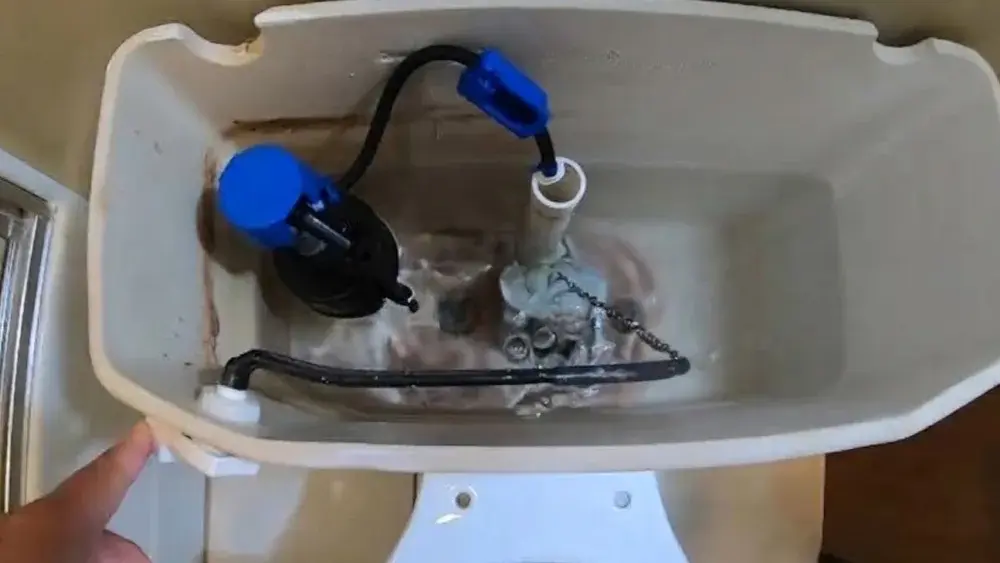
Tank faults are the most common reason a homeowner calls about a toilet, and they are often quick to fix. A toilet that refills on its own can also push up the water bill, so it is worth fixing early. If several toilets in the house run at random, leak detection helps separate fixture faults from a hidden supply leak.
The rubber seal lets water creep from the tank into the bowl, so the fill valve keeps topping up.
The valve will not shut off cleanly, or it hisses long after the tank has refilled.
A slack chain, a bent arm or a broken handle stops the flush from lifting the flapper fully.
The shutoff behind the toilet drips at the stem or will not close, so it needs replacing before other work.
Mineral build-up under the rim narrows the jets and leaves a lazy swirl.
When the toilet is only the first place a backup shows
A toilet that gurgles, bubbles when the shower runs or lets sewage creep up while other drains are slow points past the fixture. In Oakley the public sewer belongs to Ironhouse Sanitary District, but the lateral that connects your building to it is the property owner's to maintain. A plunger will not help with that, and a main-line clog needs sewer line cleaning with a camera look afterward.
The district's October 2024 main break at East Cypress Road and Main Street shows the dividing line. A failure in the public pipe is the district's job, while a backup that starts inside your own lateral is yours. Ask Ironhouse Sanitary District at (925) 625-2279 if you are unsure which side of the line you are on.
Setting a toilet back on the flange is work the California Plumbing Code (UPC-derived), covers, including the seal and the bolts.
Installing a new toilet
A replacement starts with removing the old toilet, checking the flange, fitting a new wax ring or seal, setting the bowl level and connecting a new supply line. We also swap an old shutoff valve at the same visit when it is stiff or corroded, since it is the part you will rely on next time.
Choose a bowl whose rough-in distance matches your floor outlet, and tell us if you want a taller seat height or an elongated bowl. Bidet seats and one-piece toilets need a nearby outlet or a particular tank fit, so share the model before we come. For bigger bathroom work, see our plumbing installation page.
What affects the price of a toilet repair
The price depends on what we find when we open the toilet up, which is why we give a clear price before work starts. These are the factors that move it most.
- Parts versus replacement. A flapper and fill valve are a small repair, while a new toilet adds the fixture itself.
- Flange and floor condition. A cracked flange or soft subfloor adds repair work beneath the toilet.
- Access and removal. Tight spaces, tile work and removing an old toilet affect the time.
- Supply valve and line. Old shutoffs and braided lines are usually replaced during the job.
- After-hours call-out. Night, weekend and holiday visits are priced differently from daytime ones.
Homeowner policies often cover sudden and accidental water damage, such as an overflow soaking a floor, but not gradual wear on a part. Photograph everything, keep the old parts if you can, and ask your insurer before you start repairs.
Call (855) 575-2890 and describe the toilet, and we will give you a real number before we start.
Frequently asked questions
Yes. Our dispatch line is open 24/7, and overflow calls are handled the same way on a Sunday night as on a weekday morning.
A running tank is the kind of fault that often fits a same-day slot.
Look for water or staining at the base, a sewer smell, or a toilet that shifts when used. A leak that only appears after a flush usually points to the seal.
Usually the flapper or fill valve is letting water slip into the bowl. Because the leak is silent, it can run for days before anyone notices, and your next bill will show it.
A gurgle often means air is being pulled through a partly blocked drain or vent. If more than one fixture does it, the problem is likely in the main line instead of the toilet, so tell us when you call.
We service many one-piece and bidet-equipped models, though some parts are brand specific. Send the model name and a photo of the tank or seat so we can plan the parts.
The lateral between your building and the public sewer belongs to the property owner, while Ironhouse Sanitary District runs the public main. If you are unsure where a blockage sits, call the district and describe what you see.
We give a clear price before work starts, after we have looked at the toilet and understood the scope. Ask when you call and we will explain how the visit is priced.
Running tank, wobbling base or cracked bowl in Oakley, call and we will work out the repair or replacement together.
Call (855) 575-2890