
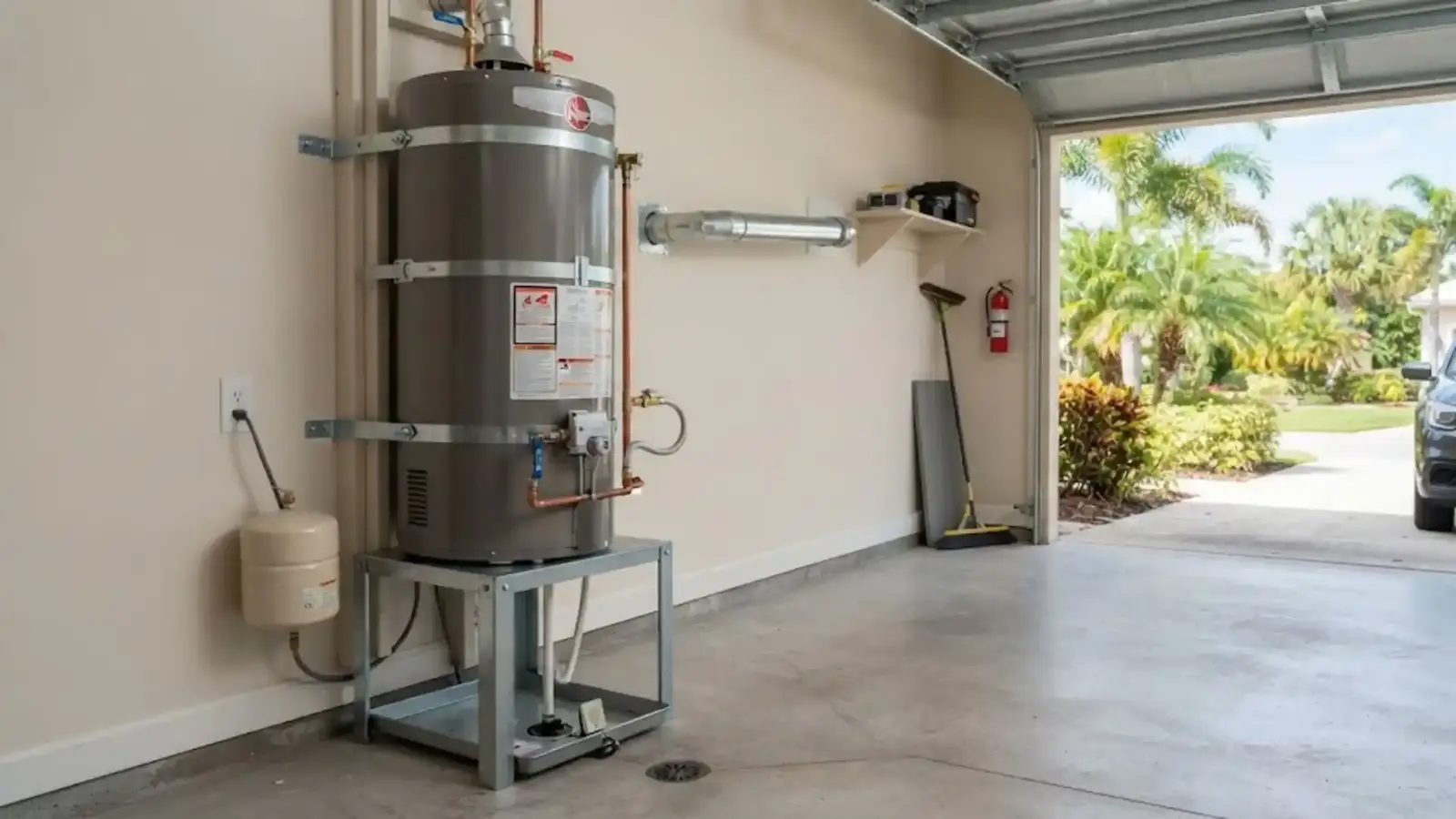
Water Heater Installation in Oakley, CA
Water heater installation in Oakley, CA, planned ahead: the right size, the right venting, strapping and a clean hookup.
Pick your day, and we handle the details before the old unit is out.
Water heater installation is the planned setting of a new tank, tankless or heat pump unit, including sizing, fuel connections, venting, drain and earthquake strapping. In Oakley, CA, the work is usually done in a garage, closet or side yard in a home built since the 1980s, when most of the city's housing arrived.
This page is for scheduled jobs, so you have time to compare fuel types and ask the City about permits. If your current tank is already flooding, our replacement page covers the emergency route.
Sizing the unit to your household
Size comes from how many people shower in the same hour, how many bathrooms you have and whether a soaking tub or a long laundry run is part of daily life. A tank that is too small runs out of hot water, and one that is too big burns fuel keeping extra water warm.
We look at first-hour capacity for tanks and flow rate for tankless units, then match it to the space you actually have. Bring up any plan to add a bathroom, an in-law unit or a pool house, because that changes the answer.
Rules that shape an Oakley install
Fuel choice is partly a rules question. As of late October 2026 the Air District still lists January 1, 2027 for its zero-NOx rule on smaller gas water heaters, and that date matters only for a unit being newly installed, never for one already in service.
Draft amendments released in July 2026 would delay that to January 2028 and add exemptions, with the Air District Board scheduled to take them up on November 4, 2026, so confirm the adopted date at baaqmd.gov before you order a gas unit.
Any new or replacement tank must be braced or strapped under Health and Safety Code 19211, using a strapping kit for standard units of 120 gallons or less. Before booking an install, ask the City of Oakley Building Division at 925-625-7005 if it needs a permit, and plan around the permit counter at 3231 Main Street being open Monday through Thursday.
Pick a day for the new heater and we will confirm sizing, venting and strapping before anything comes off the wall.
Call (855) 575-2890Fuel and type options side by side
Each type asks something different of the space it lives in. This table compares what the house has to provide, not what the unit costs.
| Type | What the house must provide | Space and venting | Planning note |
|---|---|---|---|
| Gas tank | Gas line, flue, combustion air | Vertical vent through the roof or wall, clear space around the burner | Check the Air District schedule above |
| Electric tank | 240-volt circuit with the right breaker | No flue, so more placement freedom | Panel capacity can limit the choice |
| Heat pump (hybrid) | 240-volt circuit, condensate drain, airflow | Needs surrounding air volume and clearance | Cooler, quieter room is a side effect |
| Tankless gas | Larger gas line, venting, power | Wall mount with specific vent runs | See tankless service |
What moves the price of a planned install
Because there is no emergency, you can compare options calmly. These are the pieces that decide the total.
- Unit type and size. The unit itself leads the bill, and tankless and heat pump models run higher than basic tanks.
- Moving or changing the location. Relocating a unit means new supply, drain and venting or electrical runs.
- Fuel conversion. Gas to electric or the reverse needs a new circuit or gas line.
- Code items. Seismic strapping, an expansion tank, a drain pan and a proper relief discharge line are standard parts of a clean install.
- Permit and inspection. If the City requires a permit, plan for the time to obtain it. Ask the Building Division what applies.
A planned upgrade is normally an owner expense. Some insurers ask for proof of water-damage prevention features, so ask yours whether a pan, leak sensor or auto-shutoff earns anything.
Call (855) 575-2890 and we will walk through the options and give a clear price before work starts.
Get ready for install day
A little preparation shortens the visit and avoids surprises.
Move stored items in the garage or closet so the old unit and new unit can pass without bumping into things.
Photograph the rating plate showing fuel, capacity and model. We can plan parts from it.
Find the main water shutoff and, for gas, the gas shutoff. If you cannot locate either, tell us.
Water to the whole house is off for part of the visit, so plan showers and laundry around it.
If you might add a bathroom or solar, say so before we choose the unit.
Strapping, expansion and the small parts that matter
The installer's craft shows in the pieces nobody sees afterward. A closed plumbing system with a backflow device on the supply can trap pressure when the water heats, and an expansion tank gives it somewhere to go.
A relief valve with a full-size discharge line, a drain pan with a path to a safe spot and flexible connectors with isolation valves all make later service easier. If your home needs other fixture or line work at the same time, schedule it together so walls are opened once. We serve nearby Brentwood with the same approach.
Frequently asked questions
A standard swap of the same type is often a half-day job. Changing fuel type, adding a vent or running a new circuit extends it, and we tell you before booking.
It depends on the number of people, bathrooms and appliances using hot water in the same hour. We size from first-hour capacity or flow rate and check that it fits your space.
Often, if there is room, clearance, a condensate path and a 240-volt circuit. Ask your electric provider about incentives.
As of late October 2026, the zero-NOx standard for new gas units is scheduled for January 1, 2027, with a draft delay to January 2028 under Board review. The Air District website carries the adopted date.
Yes. Health and Safety Code 19211 requires new and replacement water heaters to be braced, anchored or strapped, and we include it.
The City does not list water heater work specifically, so a quick call to the Building Division settles it. Permits can go to the owner, an agent or a CSLB-licensed contractor.
Yes, after checking gas line size, venting and power. Our tankless page covers service and descaling.
Book the install while the old unit still works and avoid a cold-water scramble.
Call (855) 575-2890