Emergency Water Heater Repair in Oakley, CA
Water heater repair in Oakley, CA starts with finding out what actually failed: the pilot, thermostat, element, valve or the tank itself.
We diagnose first, tell you plainly if a fix will hold, and quote before work begins.
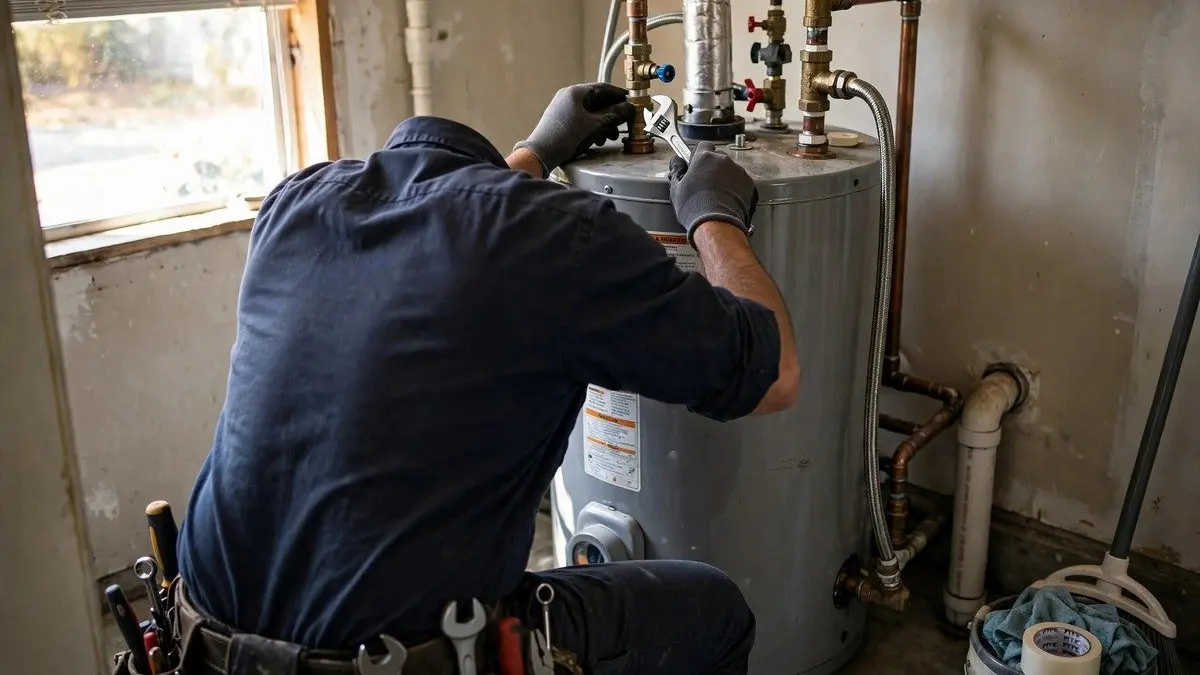
Water heater repair is the diagnosis and fixing of a unit that still has a sound tank but has lost heat, pressure or safety function. In Oakley, CA most calls trace to a small, replaceable part, though a leaking shell is a different matter.
Contra Costa County homes mix gas and electric units, and the right repair depends on which one you own. Below you will find the symptoms we hear most, what to do while you wait, how gas, electric and hybrid units differ, and how to judge a repair against a new unit.
What your symptom usually points to
A heater tends to announce its problem in a recognizable way. Matching the sign to the likely cause saves time on the phone.
On gas, a pilot or thermocouple trouble is common. On electric, look for a tripped breaker, a tripped reset button or a dead heating element.
One burned-out element in a two-element electric tank, or a thermostat set too low, leaves you with water that never gets hot.
A failed lower element or a heavy layer of sediment shrinks the usable hot water in the tank.
The temperature and pressure relief valve or a loose fitting can drip. Tighten nothing yourself, because a weeping valve may be reacting to real pressure.
Rotten-egg odor from hot water often relates to the anode rod and water chemistry. Hissing and popping often mean sediment.
Leak or no heat tonight
A dripping heater can wait a few hours if you contain it, but a gas smell or an active spray cannot. Our 24/7 emergency dispatch covers late calls, and you can do the steps below while you wait.
The aim is to stop damage and keep everyone safe until the unit is diagnosed.
- Pilot trouble that comes with a gas smell is an evacuation, not a repair: out of the house, 911, then PG&E at 1-800-743-5000.
- Close the cold supply valve on top of the unit if water is escaping.
- Switch electric units off at the breaker so the elements never run dry.
- Set a bucket or towel dam under any drip and note how fast it fills.
- Do not relight a pilot that keeps going out, and do not bypass any safety device.
Tell us what the unit does, or what its display says, and we will bring the likely parts to the first visit.
Call (855) 575-2890Repair or replace: a quick decision table
Repair makes sense when the tank is intact and the part is inexpensive relative to the unit. The table maps common faults to a lean, with the final call after inspection.
| Fault | What fixes it | Our usual lean |
|---|---|---|
| Bad thermostat or element | Swap the part and test | Repair if the tank is sound |
| Failed gas valve or thermocouple | Replace the part and check venting | Repair on a newer unit, consider replacement on an old one |
| Dripping relief valve | Check pressure, thermal expansion, then replace valve | Repair, then look at the expansion tank |
| Heavy sediment, noise | Flush the tank | Repair if the unit is not leaking |
| Water at the shell or base | No repair available | Replace, see water heater replacement |
Gas, electric and hybrid units are repaired differently
Gas heaters depend on a burner, a pilot or ignitor, a thermocouple and a gas control valve, plus a flue that must draft correctly. Electric tanks lean on two heating elements, thermostats and a high-limit switch, so the breaker panel is part of the diagnosis.
Hybrid heat pump units add a compressor, fan, air filter and condensate drain, and they often run in a fallback electric mode when a fault appears. We check the manufacturer's fault code first, then look at airflow, drain and the backup element.
Many modern heaters show a fault code on a display or a blink pattern. Read the code off the unit and we can narrow the cause before arriving.
Oakley water and the parts that wear out
Diablo Water District reports average hardness of 124 mg/L (about 7 grains per gallon) for its 2025 water, with a range of 87 to 150 mg/L. That is at the low end of hard water, but hot water speeds up scale, so tanks collect sediment on the bottom and on the heating elements over the years.
The sacrificial anode rod is meant to corrode first so the tank steel does not. Checking it at a service visit tells you whether the tank still has life, and replacing it early can be cheaper than waiting for a rusted shell. Relief valves and gas connections must still meet the California Plumbing Code, built from the Uniform Plumbing Code (UPC) text, after a repair.
Why one repair bill differs from the next
A repair estimate depends on the fault and on how hard the part is to reach.
- The failed part. A thermostat is small and quick. A gas control valve or a hybrid compressor is a larger job.
- Unit age and model. Parts for older or discontinued models can be hard to find, which can tip the decision toward a new unit.
- Fuel type. Gas work includes venting and combustion checks that electric work does not.
- Access and location. Attic and tight closet units take longer to work around.
- Diagnosis time. Intermittent faults and error codes take longer to trace.
Gradual wear is normally a maintenance item, while a sudden burst that damages your home may be covered under some policies. Ask your insurer, and keep photos of any water damage and the unit's label.
Call (855) 575-2890 for a clear price before work starts.
Service visits that stretch a tank's life
A flush clears the sediment that builds on the tank floor, which quiets the rumble and helps a gas burner transfer heat. Draining a few gallons every year is a common practice, though your manufacturer's manual has the schedule.
If your tank is nearing the end, a service visit gives an honest read on whether to keep it. Some owners also move to an on-demand unit, and we explain the service side on the tankless water heater page. The same service covers Brentwood too.
A repair visit also lets us look at the shutoff valve, the drain pan and the discharge pipe from the relief valve, because those inexpensive pieces decide how much damage a future failure causes.
If any of them is corroded or missing, we say so and explain the fix before touching it. Owners who rent out a unit or run a small shop from the property often schedule the check once a year, and a short written note of what was found helps with later decisions.
- Flush and sediment check
- Anode rod inspection
- Relief valve test
- Thermostat setting for safe delivery
- Venting and gas leak check on gas units
Frequently asked questions
On a gas unit, the pilot, thermocouple or gas valve is the usual cause. On electric, check the breaker and the high-limit reset, then call if the problem remains.
Yes. Dispatch answers all night, and a stable fault such as a weak pilot may fit a same-day booking. Call (855) 575-2890 with the symptom and fuel type.
If the water comes from the tank shell, no. If it comes from a valve, fitting or supply line, often yes. The inspection tells which one.
A new unit that stays cold often has a tripped breaker, an unlit pilot, a closed gas valve or a wiring issue. Call the installer first if the unit is under their labor warranty.
It corrodes in place of the tank steel. Once it is used up, the tank itself begins to rust, so checking it every few years can extend the unit's life.
Yes, we check airflow, the filter, the condensate drain and the controls. Tell us the brand and any code so we can plan the parts.
Simple repairs seldom involve one, but swapping a part for a different type may, and City staff can say which side your repair falls on.
Get the pilot, element or valve sorted and the shower hot again, or learn honestly that the tank is done.
Call (855) 575-2890