Repiping in Oakley, CA
Repiping in Oakley, CA replaces the water supply pipes inside your house with new lines, so leaks, rust-colored water and weak flow stop coming back.
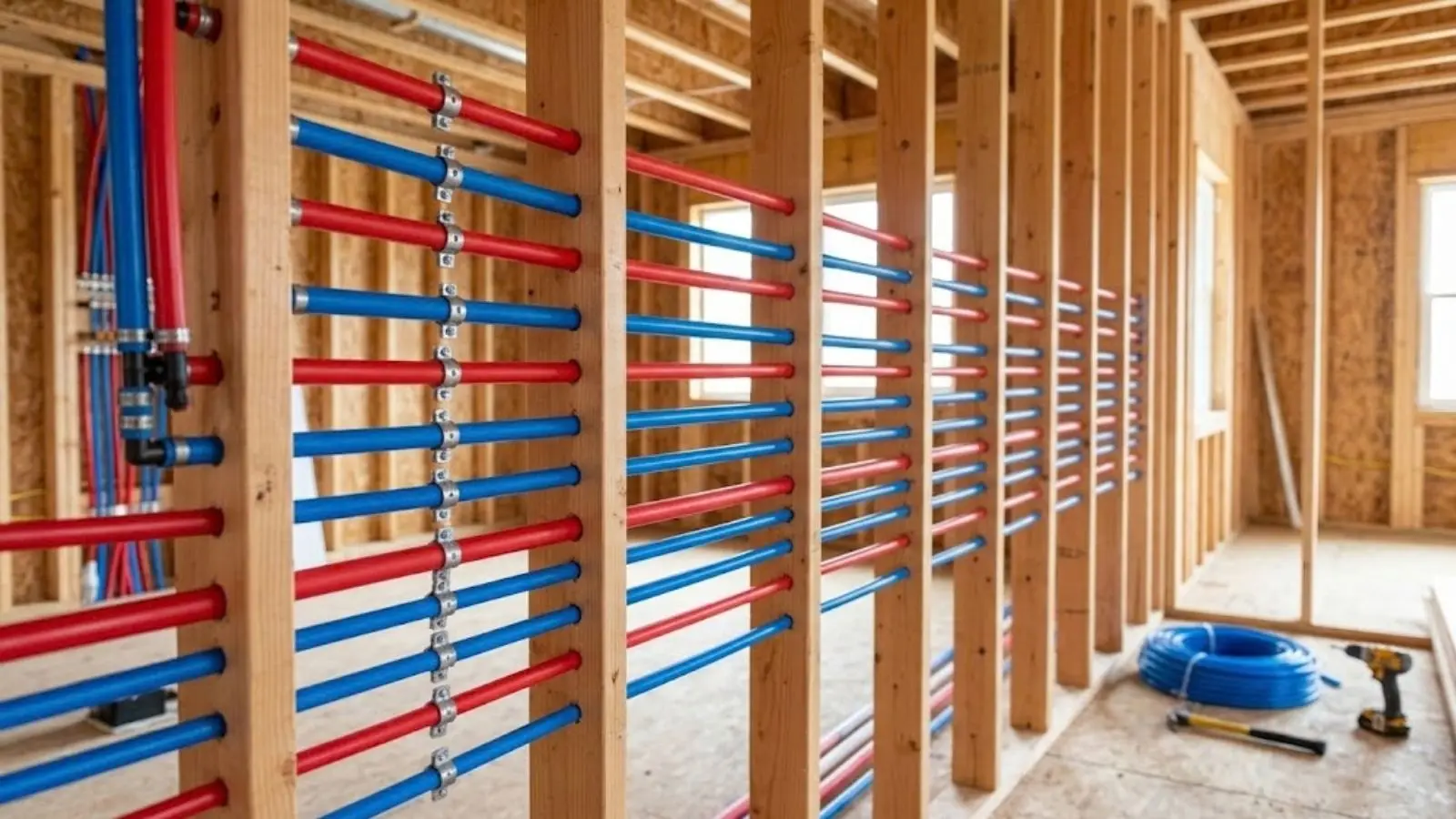
Repiping means removing the old hot and cold supply lines inside the walls, attic and floor and installing new ones, usually in copper or PEX. It does not include the buried line from the Diablo Water District meter to the house, which is handled separately.
Most housing in Oakley was built from the 1980s onward, so many homes are old enough to be worth checking. This page covers when to repipe, which materials fit, how the work is staged, a low water pressure section and what affects the price.
When replacing the pipes beats patching them
One leak on healthy pipe is a repair. A pattern is the real signal: a second pinhole within a year, a patched section that fails next to the patch, brown water at the tap or a plumber telling you the pipe wall is thin. At that point each repair buys little time and each leak risks drywall, flooring and mold.
If you are still deciding whether the problem is isolated, a leak detection visit can show how many weak spots there are before you commit to a bigger job.
- Repeated leaks in different rooms
- Discolored or metallic-tasting water when the tap first opens
- Visible corrosion, green crust or flaking at joints
- Pipe material that your plumber flags as brittle or failing
- A remodel that already opens walls
Signs your supply lines are wearing out
Look for these, and call if two or more apply.
Water that runs orange or brown for a while after sitting points to iron pipe corroding.
Shower and faucets weaken over time as mineral and corrosion buildup narrows the pipe.
Tiny spray marks or damp spots on pipe, especially copper, signal thinning walls.
Brittle plastic fittings crack when moved or pressurized.
A bill that creeps up with no change in use suggests a small leak somewhere.
Tired of patching pipe after pipe? Book a visit and compare repiping against another repair for your house.
Call (855) 575-2890Which pipe material to choose
Your plumber should explain the options and the trade-offs. Material does not matter as much as installation quality, but each has strengths.
| Material | Where it fits | Trade-off |
|---|---|---|
| Copper | Long-lasting lines where walls are open and heat resistance matters | More labor to install, more fittings, and some water chemistry can wear it faster |
| PEX | Fast installs through existing walls with fewer cuts | Must be protected from sunlight and some chemicals, and uses manifold or fitting systems |
| CPVC | Budget-minded jobs and cold or hot runs | Can turn brittle with age, so it is rarely our first choice |
| Galvanized steel | Not used for new work | This is the pipe most repipes replace |
What Oakley water means for new plumbing
Diablo Water District reports total hardness between 87 and 150 mg/L, with an average of 124 mg/L, which sits at the low end of hard water. That level leaves scale on fixtures and inside heaters over time, so ask about a water softener or filtration option if scale bothers you.
The district's lead and copper study tested 32 sites, none above the action levels, and no lead service lines were detected. Lead mostly comes from service lines and home plumbing, so if your house is old, ask your plumber to identify your supply pipe material. We do not test water or diagnose health effects of water, and a certified lab can do that if you want a result.
New supply piping must be a material listed under the California Plumbing Code, whose roots are in the Uniform Plumbing Code (UPC), and pressure testing is part of a proper job.
Low water pressure: pipes, valves or the street?
Weak flow is one of the most common reasons homeowners ask about repiping, but it is not always the pipes. A partly closed valve, a clogged aerator, a failing pressure regulator or a line restriction can all cause it. The first test is whether pressure is low at every fixture or only one.
If only one faucet is weak, clean the aerator or replace a cartridge. If the whole house is weak, check the main valve and meter, then ask Diablo Water District whether there is work on its side. Weak flow throughout with rusty water or old iron pipe is where repiping enters the picture.
How the work is staged
A repipe is planned, not rushed. We confirm the layout, choose a material, shut off the water for the day and run new lines through attic, crawlspace or walls, cutting access holes only where needed. Fixtures are reconnected, the system is pressure tested and the water is turned back on.
Plan for some wall and ceiling patching, and ask us how long your house will be without water. For leaks that cannot wait for a planned job, our burst pipe repair service handles the emergency first. Homes in Brentwood and the rest of Contra Costa County follow the same sequence.
What sets the price of a whole-house repipe
We give a clear price before work starts, after seeing the house. These factors move the figure the most.
- House size and layout. More bathrooms, kitchens and floors mean more pipe and more fittings.
- Pipe material. Copper, PEX and CPVC differ in material and labor.
- Access. Open attics and crawlspaces are quicker than finished walls and slabs.
- Drywall and finish repair. Patching and painting are separate from the plumbing, and can be handled by another trade.
- Permits and inspections. Permit requirements depend on the scope, so confirm with City staff before the walls are opened.
Repiping to replace worn pipe is generally maintenance and often not covered by insurance. Damage from a sudden leak may be, so ask your insurer and keep records.
Call (855) 575-2890 to book a visit and get a clear price for your house.
If the leak is under the floor
A repipe is sometimes the answer to slab leaks, because new lines can be run through walls or the attic instead of under concrete. We cover that decision on our slab leak repair page, including when rerouting makes sense.
Frequently asked questions
Repeated leaks, discolored water, falling pressure and visible corrosion all point that way. A plumber can inspect exposed pipe and give an honest view of what remains.
It depends on the house, but most take a day or more with the water off for part of it. Some drywall is opened for access and then patched.
Galvanized steel corrodes from the inside, which narrows the pipe and causes rust-colored water and low flow. It is the pipe most repipes replace.
It can become brittle with age and crack at fittings. If your plumber has flagged it, replacing before it fails costs less than flood repair.
No. This service is for lines inside the house. The line from the street to the meter is separate and falls to Diablo Water District.
That depends on the house and how the work is phased. Ask us when you book so you know when the water will be off.
New supply lines are easiest to plan before the next leak, so schedule a walkthrough now.
Call (855) 575-2890