Emergency Sewer Line Cleaning in Oakley, CA
Sewer line cleaning in Oakley, CA is for the moment when the main is blocked and every drain in the house is slow, gurgling or backing up.
The aim is to get wastewater moving again today, then keep it moving.
Sewer line cleaning is the clearing of the main drain that carries all household wastewater from the building to the Ironhouse Sanitary District sewer. It is normally done from a cleanout, using a heavy cable machine with cutting heads sized for 3-inch to 6-inch pipe.
This page covers how to recognize a main blockage, what to do in the first minutes, how the cleanout is used, and how to reduce repeat trouble from grease and roots. Planned camera work and pipe repair are covered separately.
How a blocked main shows itself
A main line blockage rarely announces itself with one symptom. These signs, especially in combination, point to the common line downstream of every fixture.
A bathroom sink, a shower and the washer all draining badly means the shared pipe is restricted.
Air displaced by a draining washer or tub escapes through the nearest water seal.
A shower, tub or floor drain at the lowest level is the first place wastewater surfaces.
A strong smell near a drain, or standing water at the cleanout cap, signals a full pipe.
Every drain is backing up: the first ten minutes
When the main is stopped, anything you flush or pour down a drain ends up on your floor. Dispatch runs 24/7, and our priority on this kind of call is to reach the cleanout and open the line. Here is what helps while you wait.
- Hold off on laundry, dishwashing, showering and flushing, because each adds water that has no exit.
- Walk the outside of the house and find the cleanout, usually a capped pipe near the foundation or the property line.
- Do not remove the cleanout cap yourself if water is standing high in it, since the pressure can spray sewage.
- Move rugs, boxes and electronics off the floor in the lowest bathroom or laundry area.
- If a neighbor on your street has the same trouble, phone the Ironhouse Sanitary District at 925-625-2279, because the blockage may be in the public main.
A toilet that bubbles when the washer drains is a classic sign of a blocked main, and the cleanout is where we start.
Call (855) 575-2890Working from the cleanout instead of the toilet
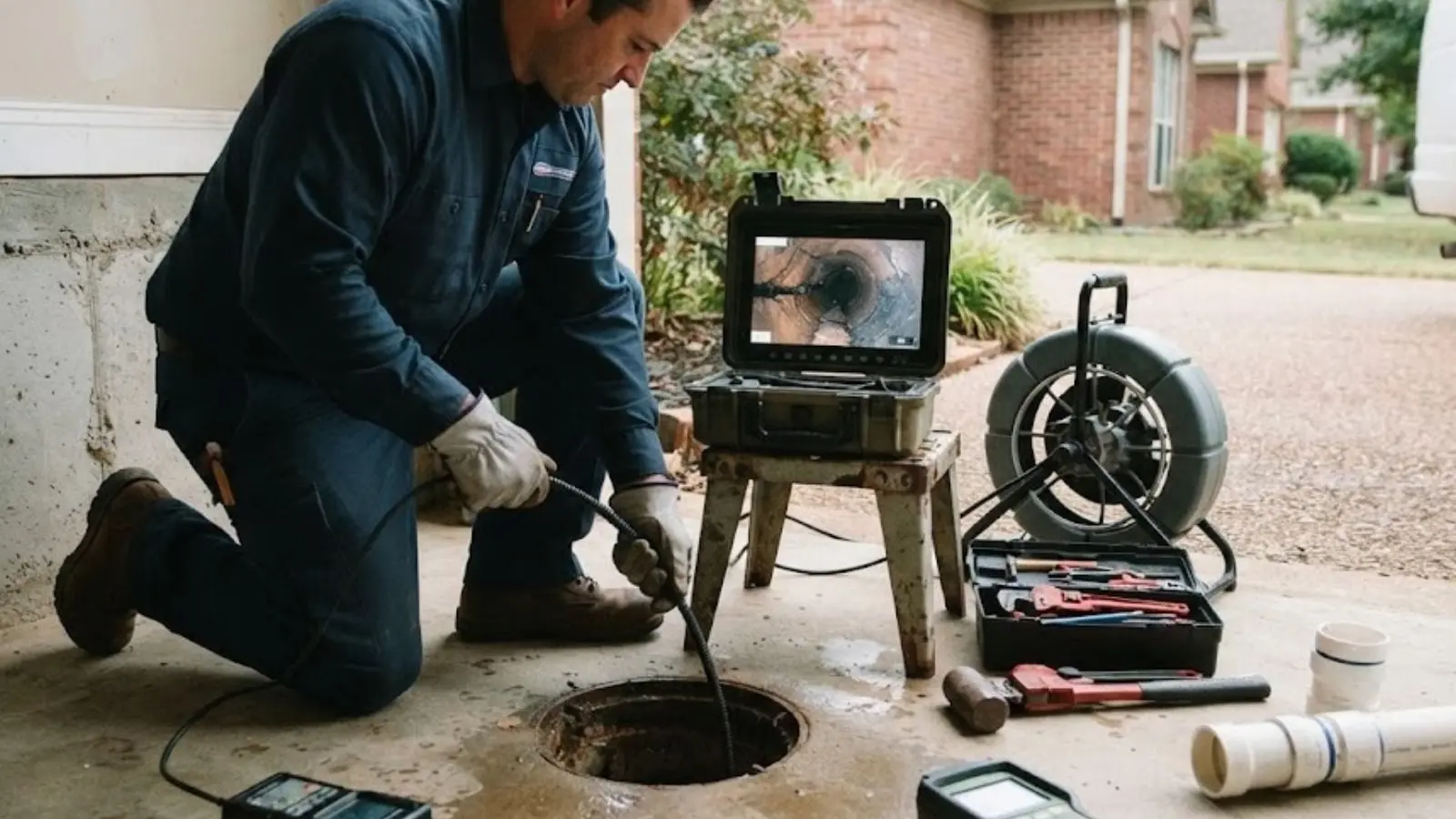
The cleanout is a capped access point on the lateral, and working through it avoids pulling a toilet. We loosen the cap slowly, let any trapped pressure settle, and feed a heavy cable toward the blockage. A cutting head chews through roots or breaks up a packed plug.
When the cable breaks through, you may see the water level in the cleanout drop quickly. We continue to the point where the lateral meets the district sewer, withdraw the cable, and run water to confirm that the whole line is carrying flow.
With no cleanout, access is harder. We may need to pull a toilet or use a roof vent, and we will tell you plainly if installing a cleanout is the sensible follow-up so the next visit is quicker.
What each stage of the visit tells you
A good clearing visit is more than pushing a cable. Each stage gives information about the line, and it changes what we recommend afterward.
| Stage | What happens | What it tells you |
|---|---|---|
| Locate the access | Find the cleanout or the nearest open point | Whether future visits can be quick or need an installed cleanout |
| Cable the blockage | Heavy cable with a cutting head runs to the obstruction | Whether the plug is soft, rooted or hard-packed |
| Check the retrieved material | Look at what comes back on the cable | Grease, paper, root fiber or foreign objects point to the cause |
| Test the flow | Run water through multiple fixtures | Whether the line is fully open or still partly restricted |
| Decide on follow-up | Compare symptoms with what was found | Whether to monitor, jet, inspect by camera or repair |
Grease, roots and what keeps the main flowing afterward
Most main line blockages are slow builds of grease and paper with roots at the joints. Kitchen fat that goes down the drain cools and clings, and wipes marketed as flushable do not break down the way toilet paper does. Keeping both out of the pipe is the cheapest maintenance there is.
If a cable returns with root fiber, the same joint will likely admit roots again. A cleaning schedule, jetting the full wall of the pipe, or a repair of the joint are the usual choices, and a camera look tells us which one makes sense.
Outdoor storm and yard drains and commercial grease traps are cleaned with different equipment, and they have their own maintenance needs. Tell us what you have when you call, and we will say whether it fits our service.
What affects the price of clearing a main line
Clearing a main line is priced by the work involved, not by a fixed list. We give a clear price before work starts, once we know where the access is and what the symptoms suggest.
- Cleanout access. An outside cleanout shortens the job. Removing a toilet to reach the line adds time.
- Distance to the blockage. The farther from the cleanout, the more cable and time the job takes.
- What the blockage is made of. Soft paper clears quickly, while packed roots or a foreign object takes cutters and repeated passes.
- After-hours dispatch. Night, weekend and holiday calls carry different labor costs than daytime visits.
- Follow-up inspection. A camera look after clearing is separate work, and it is worth doing when blockages repeat.
Most homeowner policies do not pay to clear a clog, but damage from a sudden backup can fall under sudden and accidental damage or a water backup endorsement, depending on the policy. Ask your insurer before cleanup, and photograph affected rooms and belongings first.
Call (855) 575-2890 and tell us how many fixtures are affected, and we will describe what to expect.
Public main or private lateral: who clears what
In Oakley the Ironhouse Sanitary District operates the public sewer, while the owner maintains the lateral from the house to that sewer and is responsible for overflows, cleanup and damage from private lines. If a blockage is in the lateral, you hire the plumber. If it is in the public main, the district clears it.
A real example happened in October 2024, when a district main failed at East Cypress Road and Main Street and crews worked around the clock with vacuum trucks. The lesson for you is practical: a backup on a whole street is the district's, while a backup in just your home is almost always the lateral.
If your lateral fails again after clearing, the next step is often a camera look. Our sewer inspection page explains what it shows, and the sewer line repair page explains the options when the pipe itself is damaged. Cleanout access is a California Plumbing Code matter, and that code follows the UPC model, so a missing cleanout is worth fixing.
Frequently asked questions
Yes. Dispatch is open 24/7 and a sewage backup is treated as urgent. A slow but still draining main can sometimes be booked the same day, and the price is agreed before the cable goes in.
We open the cleanout, run a heavy cable with a cutting head to the blockage, and clear it back to the district sewer. Then we test the flow.
No. Every gallon of water you add has nowhere to go, so it rises in the lowest fixture. Wait until the line is clear.
Cooking fat cools in the pipe and sticks to the walls, catching paper and food particles. Keep fat out of the sink, and if buildup is heavy, ask us about wall-cleaning methods.
Yes, cutters and jetting remove roots inside the pipe. They can regrow through the same crack, so a repair may be the lasting answer.
For a backup from your own lateral, cleanup is the owner's responsibility under Ironhouse Sanitary District rules. We clear the blockage, and a restoration company can handle contaminated materials. Check your insurance first.
Tell us which fixtures are backing up and whether you can reach the cleanout, and we will send the right cable machine.
Call (855) 575-2890