
Emergency Leak Detection in Oakley, CA
Emergency leak detection in Oakley, CA starts with a simple question: where is the water going? We trace hidden leaks in walls, floors, crawlspaces and buried lines, then mark the exact spot.
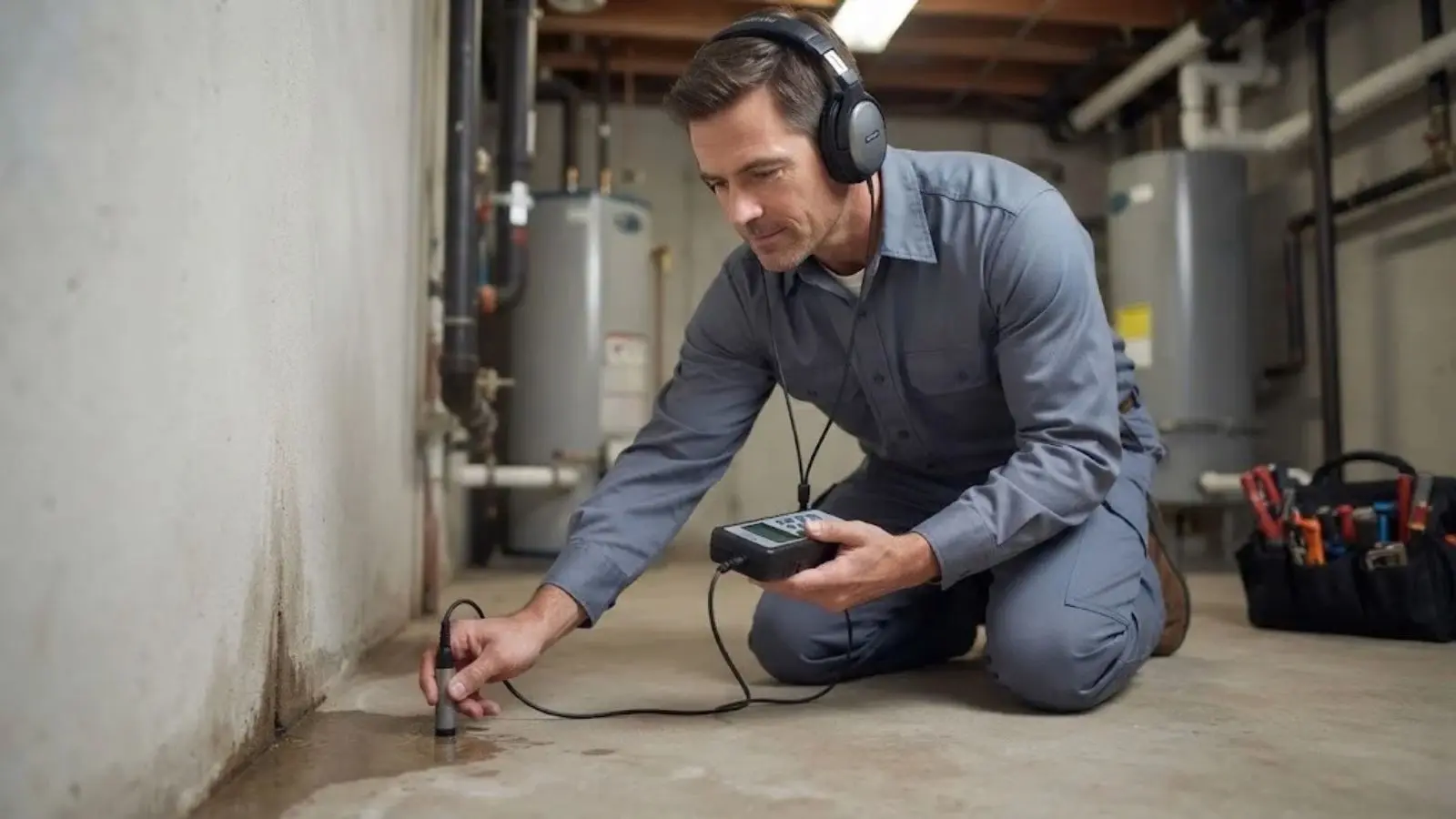
Leak detection is the process of locating a water leak you cannot see, using meter tests, listening gear, thermal imaging and pressure tests instead of opening surfaces at random.
In Oakley, homes in Contra Costa County draw water through Diablo Water District meters, so a spinning meter with every tap closed is often the first clue. This page walks through the meter check, the service line, ceilings, crawlspaces, buried pipe, irrigation and more, plus what the work involves and what affects the price.
My water meter keeps moving and I cannot find a leak anywhere
If the meter dial turns while every fixture is off, or the bill climbed with no change in how you live, water is escaping somewhere you cannot see. The technical name for finding it is leak detection, and it narrows the problem from the whole property to a single spot before anyone cuts into drywall, concrete or soil.
Water is actively coming through a ceiling, wall or floor
Active water means damage grows by the minute, so act first and diagnose second. Our 24/7 emergency dispatch can send someone out while you contain the problem, and the steps below keep a bad situation from getting worse.
- Close the main shutoff valve at the house, then open one low faucet to relieve pressure.
- Switch off power to the wet area at the breaker if water is near outlets, fixtures or a light.
- Move furniture and rugs away, and set a bucket under any drip point.
- If a ceiling is bulging, place a bucket below it and keep people out of that room until the water source is closed.
- Photograph the stain, the meter and the shutoff for your insurer before you clean up.
Meter still moving with everything off? Describe what you see and we will line up the right tools for a hidden leak.
Call (855) 575-2890Using the meter and your bill to prove there is a leak
The meter is the most honest witness in the house. Turn off every tap, the ice maker and the irrigation, then check whether the small low-flow indicator on the dial is still moving. Write down the reading, wait an hour with nothing running, and read it again.
A changed number means water is leaving the system. A steady number but a bill that keeps rising points to an intermittent culprit, usually a toilet flapper that seals badly now and then or an irrigation valve that sticks open.
- Check each toilet with a few drops of food coloring in the tank and wait without flushing.
- Shut off the water heater supply for an hour and watch whether the movement stops.
- Compare several past bills, not only the latest one.
- Ask Diablo Water District whether it can review your usage history or offers any adjustment after a repair.
Where Diablo Water District's pipe ends and yours begins
The District keeps its mains and the line feeding your meter in repair, which leaves the pipe from the meter inward as your concern. Past that point the pipe belongs to the property owner. Wet ground between the street and the meter means a call to the district at (925) 625-3798, and the meter test above tells you which side of the line you are on.
If the meter is quiet when the house is closed up, the loss is probably in the district's section, and your next step is a call to Diablo Water District to learn where its pipe ends on your lot. If the meter runs, the water is leaving through the line between the meter and your foundation or through the house plumbing, and that is where our detection work begins.
Public and private lines are different jobs for sewer pipes too. In October 2024 a sewer main failed at East Cypress Road and Main Street, and Ironhouse Sanitary District crews handled it because it was public pipe. The lesson for you is the same: a break in the district's line is the district's repair, and a problem inside your own line is yours.
Any pipe opened to fix what we find is closed back to the California Plumbing Code, written on the UPC model.
Damp spots on ceilings and inside walls
A brown ring on a ceiling below a bathroom, a soft patch of drywall in the garage or a cold, clammy wall usually points to a supply line, a drain joint or a shower pan above or behind the surface. The stain is rarely directly under the source, because water runs along framing before it shows itself.
We use a moisture meter and thermal camera to map the wet area without opening it, then confirm with a pressure test on the suspect line. That lets us cut one small access hole instead of several. A stained ceiling is not always an emergency, but a sagging or dripping one is, so shut the water off and call.
Sounds and moisture under the house
A hiss or trickle beneath the floor at night, a musty smell in a closet or a cold spot on a wood floor can mean a supply line or drain leaking in the crawlspace. If your home has an under-floor space, look for dark framing, damp insulation and fresh mold on the joists.
Crawlspace leaks tend to go unnoticed for weeks, which is why they show up as a high bill first. A sewage smell is a different problem, since it points to a drain joint, and a drain camera helps tell the two apart. Never crawl into a flooded space with live wiring, and call before you enter.
Buried lines under the yard and driveway
Water that surfaces as a swampy patch, a green stripe in dry grass or a soft spot in the lawn may have traveled a long way from the break. Buried pipe is traced with ground microphones, tracer gas or a line locator, and the leak is marked on the surface before any digging.
Crawlspace leaks go unnoticed for weeks, which is why they often show up as a high bill first. A sewage smell points to a drain joint instead, and a drain camera helps tell the two apart. Never crawl into a flooded space with live wiring.
How each detection method works and when it fits
Different leaks respond to different tools, so most jobs combine two or three. This table shows what each method finds and what it cannot.
| Method | Best for | Limits |
|---|---|---|
| Meter and shutoff test | Proving a leak exists and which side of the meter | Does not locate the spot |
| Acoustic listening | Pressurized pipe in walls, floors and soil | Noise from traffic or running appliances can mask a quiet leak |
| Thermal imaging | Hot lines, wet drywall and radiant floors | Cold-water leaks show as faint temperature changes |
| Pressure test | Isolating one line or zone | Needs a section that can be shut off |
| Tracer gas | Buried plastic or hard-to-hear lines | Takes longer to set up |
| Drain camera | Sewer and drain leaks | Does not show pressurized supply lines |
Sprinklers, pools, spas and the meter box
Irrigation lines are the most common outdoor suspect. A zone that runs very fast, a soggy strip along a sprinkler line or a valve that sticks open all point to a broken lateral, and shutting that zone off for a day tells you whether the meter slows.
We also look at pool and spa plumbing, since fittings and returns can lose water into the ground without any visible pool damage. Our test covers the plumbing lines, not the shell. A wet spot beside the meter box needs a call to Diablo Water District first, because the box and the line up to it may be the district's. The same checks apply for homes in Brentwood, which runs its own water system.
What affects the price of finding a leak
Different leaks respond to different tools, so most jobs combine two or three.
- Number of suspect areas. One bathroom is quick. A whole house, a yard and a service line take longer and use more equipment.
- Access and surfaces. Tile, hardwood, concrete and landscaping all change how we test and how much repair follows.
- Type of pipe. Metal lines carry sound well. Plastic lines are quieter and often need tracer gas or pressure testing.
- Time of day. Night and weekend visits can price differently from a scheduled daytime appointment, and same-day appointments are offered when available.
- Repair after detection. Finding the leak and fixing it are separate steps, so the repair method and materials set the second figure.
Many homeowner policies cover sudden and accidental water damage but not gradual wear or a slow leak left alone for months. Ask your insurer what applies, and keep photos of the damage, the meter and any reports.
Call (855) 575-2890 and describe what you see so we can give you a real number.
What to document before we arrive
A few notes save time on site and help with any claim.
Write the number and the time, then again after an hour with everything off.
Take wide shots and close-ups of stains, wet flooring and the shutoff valve.
Note when you first saw it and any recent plumbing or remodel work.
Keep recent water statements so we can compare the pattern.
Frequently asked questions
A hidden leak is the usual cause. Check the meter with everything off, since a moving dial confirms water is leaving the system. If the dial stays still, look at irrigation timers and toilets that refill on their own.
Yes, our 24/7 emergency dispatch covers active leaks at any hour. Shut off the main valve first and call (855) 575-2890 so we can plan the visit.
Often, yes. Thermal imaging, a moisture meter and acoustic listening can narrow a leak to a small area before any cutting. A small access hole is sometimes still needed to confirm and repair it.
A leak ahead of the meter belongs to the District, and one behind it belongs to you. After that, the owner maintains the pipe. The District will tell you where its line stops at your address.
Yes. Attic supply lines and hose bibs get the same method: a meter test first, then isolating the line. A burst or split pipe found this way moves to our burst pipe repair service.
For most leaks, yes. We mark the spot, explain the repair options and give a clear price before work starts. Larger jobs such as repiping are planned separately.
Yes. Tell us how many units share the line when you call.
A leak found today is a smaller repair than the one you find next month, so book your detection visit now.
Call (855) 575-2890