
Emergency Slab Leak Repair in Oakley, CA
Slab leak repair in Oakley, CA means fixing a water line that has failed in or beneath a concrete floor. We locate the break, explain your options and repair it with as little demolition as the job allows.
A slab leak is a leak in a pressurized pipe that runs under or inside a concrete foundation slab. If your home is on a concrete slab, those lines are out of sight, so the first signs are usually a warm patch of floor, the sound of running water or a meter that will not stop.
This page covers the warning signs, what to do right away, how the break is found, your repair choices and what changes the price for homes in Contra Costa County.
There is a warm spot on my floor and I can hear water running
A floor that feels warm underfoot, a faint hiss when the house is quiet or damp flooring with no obvious source often means a pressurized line is leaking beneath the concrete. Plumbers call this a slab leak, and it is a repair job rather than a mystery once the break is pinpointed.
Water is rising through the floor or the meter will not stop
A leak under concrete can undermine flooring and soak cabinets quickly, so treat visible water as urgent. Our 24/7 emergency dispatch is available, and the steps below limit the damage while you wait.
- Close the main shutoff valve at the house or at the meter box, then open a faucet to drain the lines.
- Turn off the water heater, since a heater running on empty can be damaged. For a gas unit, set the control to pilot or off.
- A gas smell alongside a floor problem means exit now, then 911 and PG&E at 1-800-743-5000, with the plumber after that.
- Roll up rugs and lift cardboard boxes off the floor to keep wet material from spreading.
- Photograph wet flooring, baseboards and the meter reading for your insurer.
A warm patch on the floor is worth a call today, before the leak spreads under cabinets and walls.
Call (855) 575-2890Signs that point to a leak under the concrete
No single sign proves it, but two or three together make a slab leak likely.
A hot water line leaking under the slab can warm the concrete in a small patch.
A hiss, trickle or rushing noise with every fixture closed.
The dial or low-flow indicator keeps turning with everything off.
Moisture wicks up walls and pushes laminate or wood out of shape.
Weak flow only on the hot side suggests the heater supply line.
Spot repair, reroute or repipe: choosing the right fix
There are three standard ways to deal with a leaking slab line, and the right one depends on the pipe's condition, the number of leaks and your floors. Each trades cost and disruption differently.
| Option | How it works | Best when | Trade-off |
|---|---|---|---|
| Spot repair | Open the slab above the break, replace the failed section and patch | One leak on otherwise sound pipe | Concrete work, and other weak spots may remain |
| Reroute | Abandon the bad run and install new pipe through walls or the attic | A line has failed more than once or is hard to reach | Some walls or ceilings are opened and patched |
| Whole-house repipe | Replace the supply system with new pipe, see repiping | Several leaks or aging pipe throughout | Largest job, but ends repeat slab repairs |
How the break is found without breaking up the slab
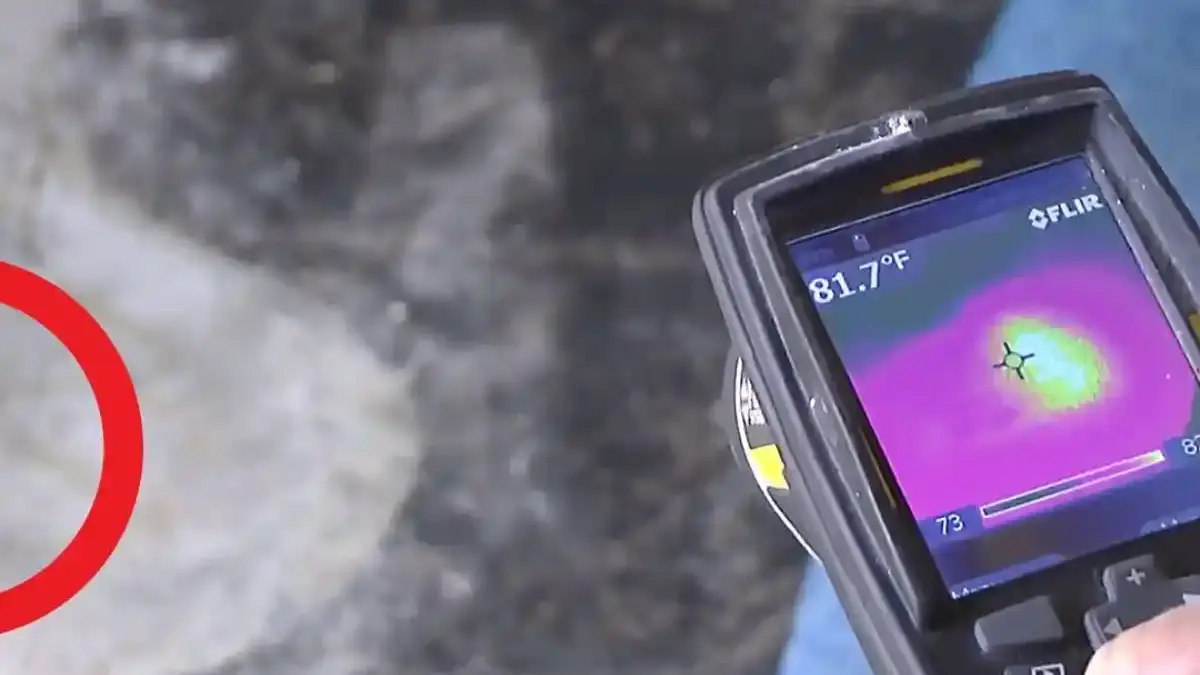
Finding the break comes first, and it is done with a meter test, acoustic listening and thermal imaging so the crew knows where to open the slab. The general methods are covered in our leak detection service, and slab work uses the same tools aimed at the floor.
Once the spot is marked, we cut only as much concrete as the repair needs, make the fix, pressure test the line and restore the opening. Whether a slab cut can be patched to match your flooring depends on what is on top, so ask us about tile, vinyl or hardwood before the work starts.
Water heaters and garages: common slab leak locations
Hot lines often fail near the water heater, because heat and flexing are hardest on the pipe where it enters the floor. If the heater sits in a garage, a damp patch near its base can be a supply fitting leaking into the slab, not the tank itself.
Check the tank, the shutoff valve and the base for moisture before blaming the floor. If the tank is the problem, our water heater repair work covers it, and a leak beyond the heater's connections is the slab leak we handle here.
Meters, permits and what is yours to repair in Oakley
Here in Oakley the District's pipe ends at the meter or backflow device, so a leak under your floor sits on your side. A slab leak sits on the owner's side, so the repair and cost are yours unless your insurance responds.
Whether a permit applies to a slab repair is a question for the City Building Division, and it should be answered before any concrete is cut. Neighbors in nearby Brentwood deal with a different water system, so check which utility serves your address first.
What drives the cost of a slab leak repair
Slab jobs vary widely, so we give a clear price before work starts after the break is located.
- Depth and access. A break near a wall is simpler than one under the middle of a finished room.
- Floor covering. Tile and hardwood take more careful removal and patching than bare concrete.
- Repair method. A spot repair, a reroute and a repipe differ greatly in materials and labor.
- Number of leaks. Several leaks on the same pipe often make a reroute the sensible choice.
- Follow-up work. Drying, flooring and drywall repairs are separate from the plumbing.
Policies often cover sudden and accidental water damage but may exclude gradual leaks or the cost of accessing the pipe. Ask your insurer exactly what is covered, and keep photos and bills.
Call (855) 575-2890 for a real number once we know where the leak is.
Preventing a second failure
After a repair, keep an eye on the meter for a few days and watch for new warm spots. If the home has had one slab leak, pipe condition becomes part of the conversation, and a plumber can tell you whether the rest of the line looks worn. Heavy water pressure is also hard on aging pipe, so ask for a pressure check while we are there.
Frequently asked questions
Warm floor patches, a hiss from the floor and a moving meter lean toward the slab. Damp drywall and a stain higher up usually mean a wall or ceiling line. A pressure test and listening gear tell us for sure.
Yes, our 24/7 emergency dispatch covers active slab leaks. Shut off the main valve first, then call (855) 575-2890.
Some opening is unavoidable, but we mark the smallest cut that works. How the patch looks depends on tile, vinyl or wood, so plan for flooring work afterward.
It can be when pipes are old or multiple leaks appear. A single repair costs less up front, while a repipe reduces the chance of another break. Our plumber can show you the pipe's condition first.
The leaking line has to be isolated, and whether other fixtures keep running depends on how the pipes are laid out. Ask when you book so you know what to expect.
Only the stretch ahead of the meter is the District's. A leak after that point is on the owner's side. The District can confirm the boundary for you.
Once the break is pinpointed, you choose between a spot repair, a reroute and a repipe with a price in hand.
Call (855) 575-2890