Water Softener and Filtration in Oakley, CA
Water softener and filtration service in Oakley, CA starts with the number on the water report: Diablo Water District reports an average hardness of 124 mg/L. This is a planned job, so there is time to choose carefully.
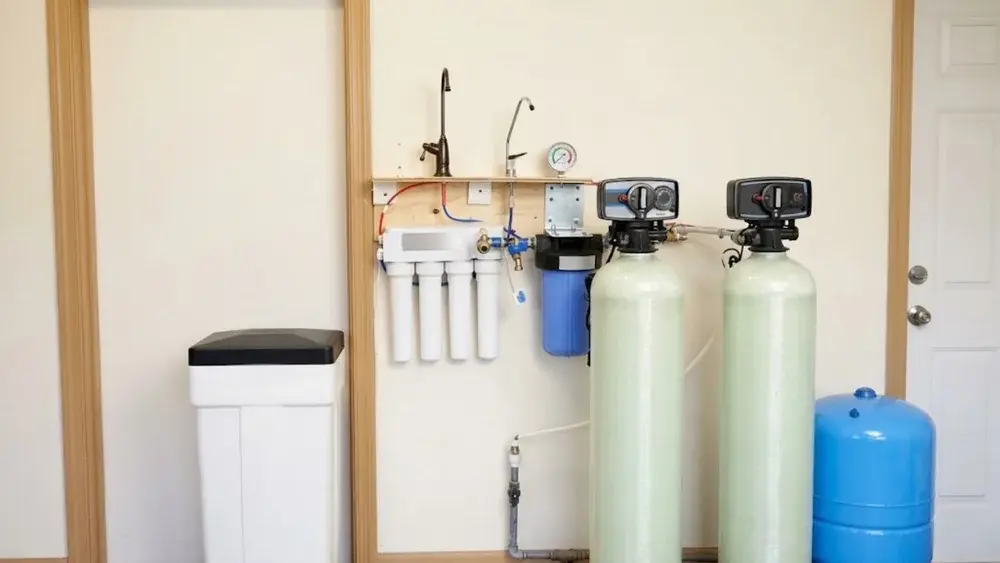
We install, repair and service softeners, conditioners and filters.
A water softener swaps the calcium and magnesium that cause hardness for sodium or potassium, while a filter removes particles or tastes without softening. They solve different problems, and many households want one, the other or both.
This page explains what the local numbers mean, compares the main options, covers where a softener goes, how repairs work and what shapes the price. We do not give health advice about water, and we say so where it matters.
What 124 mg/L means at an Oakley tap
Across the 2025 sampling, Diablo Water District measured hardness in a band from 87 up to 150 mg/L, centered on 124. That works out to about 7 grains per gallon, using 1 gpg as roughly 17.1 mg/L. On the commonly used scale, 61 to 120 is moderately hard and 121 to 180 is hard, so the average sits at the low end of hard.
In practice that means white scale on faucets and showerheads, spotted glassware and mineral build-up inside water heaters. Whether it is worth treating is your choice, and a homeowner should not feel pushed. Ask us to look at your fixtures and heater first, and we can show what scale is actually doing.
Softener drains and bypass valves are installed to the California Plumbing Code, whose parent is the UPC, and a plumber should explain how the brine line reaches the drain.
Softener, conditioner, filter or reverse osmosis
These products are often confused. The table separates what each one does, and it is honest about what each one does not do.
| System | What it does | What it does not do |
|---|---|---|
| Salt-based softener | Removes hardness minerals with ion exchange, regenerates with salt | Does not filter taste, and adds sodium in proportion to hardness removed |
| Conditioner or descaler | Changes how scale forms without removing minerals | Does not lower hardness readings |
| Whole-home filter | Catches sediment or chlorine taste at the main | Does not soften water |
| Under-sink reverse osmosis | Treats one tap for drinking and cooking | Does not protect the heater or other fixtures |
Before buying equipment, send us the model or the problem and we will say what it will and will not do in your house.
Call (855) 575-2890Signs scale is costing you
You do not need a lab test to see hardness at work. These are the common signs in a home on Diablo Water District water.
Faucet spouts, showerheads and sink edges collect crusty deposits.
Spray holes narrow as minerals build up.
Mineral layers build at the bottom of the tank and on elements. See water heater repair for what that looks like.
Dishwasher cycles leave film on glass and cutlery.
Where a softener goes and how it is installed
A softener is normally placed after the main shutoff and before the water heater, with a drain nearby for regeneration water and an outlet for the control head. Outdoor hose bibs are often left on hard water to avoid wasting softened water on lawns.
We bypass the unit, plumb it in with shutoffs, set the hardness figure, program regeneration and test for leaks. Tell us your brand if you already bought one. If the project involves a larger remodel, our plumbing installation page covers the planning.
Sodium, salt and what we will not claim
Diablo Water District reports an average sodium level of 59 mg/L in its water. A salt-based softener adds sodium to the softened water, with more added when hardness is higher. That is a fact about the process, not a medical judgment.
We do not diagnose health effects of water or recommend a system for health reasons. If sodium matters in your household, ask your doctor, and ask us about a separate unfiltered tap or potassium-based salt.
Repairing a softener or conditioner
Common faults include a control valve that stalls, a clogged injector, a salt bridge in the tank, a broken brine line and damage after a pipe was cut during other work. We check the bypass, pressure, drain line and settings before replacing parts.
If you only need a valve replaced or a unit reinstalled after a move, tell us the model. Some older units are cheaper to replace than to repair, and we will tell you which side yours falls on.
What shapes the price
Prices change with the equipment and the plumbing around it, and we give a clear price before work starts.
- System type. Softeners, filters and reverse osmosis each use different hardware.
- Capacity. Household size and hardness determine unit size.
- Plumbing changes. Bypass valves, new shutoffs and a drain connection add labor.
- Location. Garage, utility closet or crawl space installs differ in access.
- Repair versus replace. Valve, injector and control head repairs depend on the model.
Treatment equipment is a planned purchase and is not usually an insured loss. If a softener's drain or brine line leaks and damages floors suddenly, ask your insurer whether that damage is covered.
Call (855) 575-2890 with the system you have in mind, and we will give you the real number.
Frequently asked questions
Yes. We plumb them in with a bypass, a drain connection and shutoffs, then set up the control head and test for leaks.
Often yes. We check the valve, injector, brine line and settings, and tell you whether repair or replacement makes more sense for that model.
No. A filter removes particles or tastes. Softening needs ion exchange or a different treatment, and those are separate systems.
Yes. We install under-sink reverse osmosis and whole-home filters, and we explain what each one does and does not treat.
We cannot say. We do not diagnose health effects of water. We install and service the equipment, and your doctor is the right person for health questions.
Diablo Water District's 2025 report shows 87 to 150 mg/L, averaging 124 mg/L. You can read the full report on the district's website or ask the district at (925) 625-3798.
If you live in nearby Brentwood, ask the City of Brentwood for its own water quality report and check the hardness line.
Planning a softener, filter or repair in Oakley, we install it properly and explain the settings before we leave.
Call (855) 575-2890