
Slab Leak Detection in Oakley, CA: Signs and Next Steps
Slab leak detection in Oakley, CA starts with a simple meter test and ends with sound, heat or gas tracing to pinpoint the pipe. If your home sits on a concrete slab, a few signs tell you when to act.
A slab leak is a break in a water line that runs under or inside the concrete floor of a house. Because the pipe is buried, the first evidence is usually indirect: a warm tile, a hissing sound, damp edges or a bill that jumps with no change in habits.
This guide covers the signs, the first steps to take, how technicians locate the exact spot without breaking the whole floor, and how to document the problem for your insurer.
Clues that water is escaping under the floor
Only some homes have slabs, so this applies if yours does. A single clue is rarely proof, but a pair of them deserves a test.
A hot water line leaking beneath tile or laminate can heat one area while the rest stays cool. Barefoot, you may feel it before you see anything.
If every tap, ice maker and irrigation zone is idle and the dial still creeps, water is going somewhere you cannot see.
A faint hiss or trickle near a wall or at night, with no fixture in use, often travels through the slab.
Moisture at baseboards, lifted flooring or a musty smell near an exterior wall can come from below.
A rise that cannot be tied to guests, a new pool fill or watering is a soft clue worth checking against the meter.
The first hour after you suspect it
Start by confirming it. Switch off every water use, find the meter, and note the reading or the small leak indicator. Wait fifteen minutes without using water and look again. If it moved, close the main shutoff valve at the house and check whether the meter stops, which tells you whether the loss is inside the house or between the meter and your door.
Do not run a pressure washer or drill into the floor to look for it. Move rugs and electronics off wet or warm areas, and call for an appointment, since water running unseen under a slab can undermine the floor and wet drywall from below. Repairs that follow detection are made to the California Plumbing Code, state-amended from the UPC.
A meter that moves with every tap off is a strong sign. Call and we will test the lines before any digging.
Call (855) 575-2890How the leak gets located
Good detection narrows the dig to a small opening. Technicians often combine two methods so one confirms the other.
| Method | What it picks up | Limit to know about |
|---|---|---|
| Meter and pressure test | Whether a leak exists and which line, hot or cold | Does not say where along the pipe |
| Acoustic listening | The sound of escaping water through a microphone on the floor | Background noise or deep pipe can muddy the signal |
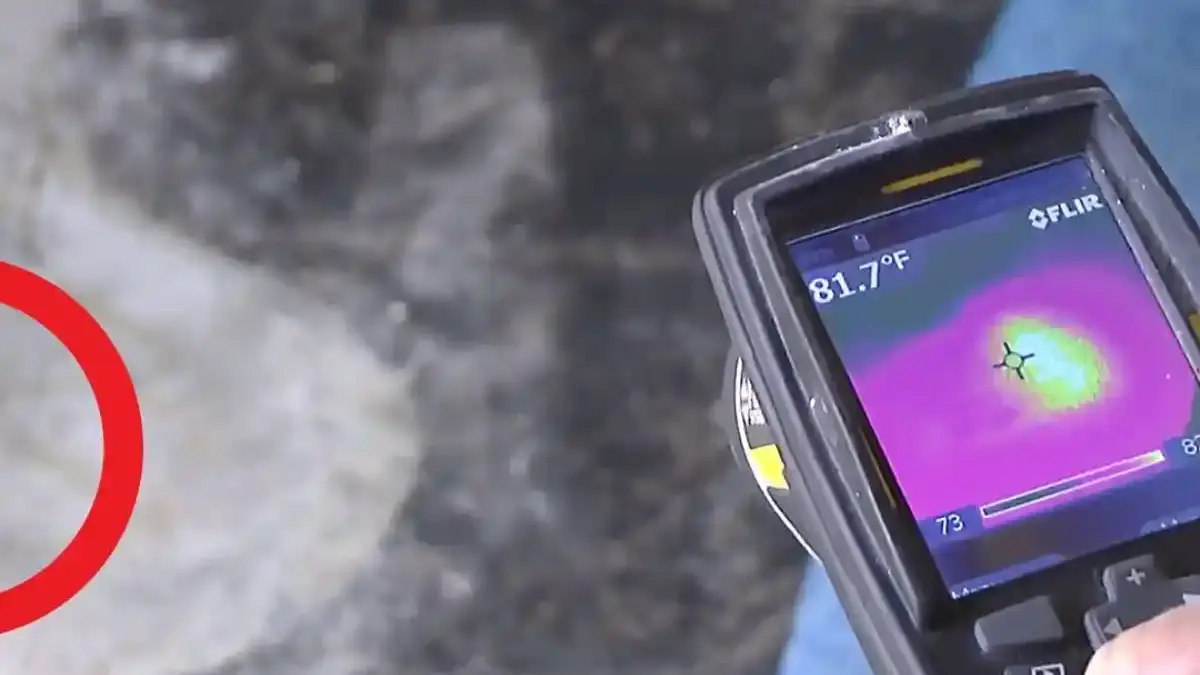
| Thermal camera | Warm patches from a hot water line | Only useful when the leak is on the hot side |
| Tracer gas | A harmless gas that escapes at the hole and is sniffed from above | Needs the line to be isolated and filled |
| Line locator | The path of the pipe, so listening is aimed correctly | Locates the pipe, not the leak itself |
Where your responsibility starts
Not every wet-looking yard or driveway comes from your slab. The District's responsibility stops at the meter or backflow device, so pipes under your slab are yours to fix. Check with the District before paying for a dig, because the boundary decides who owns the repair.
That boundary also guides the meter test. If the loss stops when you close the valve at the house, the problem is in your plumbing. If it continues, the leak may sit on the supply side, and a call to the District at (925) 625-3798 is the next step.
Paperwork that helps a claim
Insurance policies often treat sudden and accidental water damage differently from slow wear, so ask your insurer what is covered and how they define it. Take dated photos of damp flooring, the meter before and after the test, and any water bill that shows the increase. Keep receipts for drying, cleanup and temporary measures.
Our detection visit produces a written finding that names the line and the location. From there, the slab leak repair options are explained before any concrete is opened, and broader leak detection can rule out a second source.
Do it yourself or call
The meter test, a walk-through for damp spots and shutting the main are all fair homeowner tasks. Locating the leak, deciding between a spot repair, rerouting the line through the attic or walls, or a replacement, and cutting concrete are jobs for a professional. Gas near a hissing sound under the floor is not a water leak, so go outside and reach 911 and PG&E at 1-800-743-5000 first.
Meter boundaries and permits in Oakley
Your sources for the boundary question are the District's mains and meter on one side and your own plumbing on the other. In practice, a quick meter test tells you which side to call about, and it saves you from paying a contractor to dig on a pipe the District owns. DWD can confirm the boundary for your address.
Repairs that open a slab or reroute lines may need a permit, and rules vary. If the repair will open the floor, phone the City Building Division with the written leak report in hand.
Frequently asked questions
No. A pinhole in a buried line widens with pressure and time, and the water moves through the soil under the floor. Waiting adds damage and a larger bill.
Usually, but a heating element or a sunny window can warm a patch too. Check the meter test and listen for hissing to confirm.
No. Combined methods usually narrow the location to a small area, so the opening can be limited to roughly a patch of floor.
If you can see damage spreading or hear a hiss, close the main until the appointment. For a minor suspicion, keep usage minimal and avoid using hot water, since the heater will keep feeding the leak.
It depends on which side of the meter. Run the meter test first, then phone Diablo Water District about the boundary.
If you live near the Brentwood line, the Brentwood page may be useful because the neighboring city runs its own water system. Our service area page lists the towns we visit.
Give us your meter reading and the room where the floor feels warm, and we will line up the right detection method.
Call (855) 575-2890