Toilet Fill Valve and Flapper Replacement, Oakley, CA
Toilet fill valve and flapper replacement in Oakley, CA is a job most homeowners can finish in under an hour with a few inexpensive parts. A simple dye test tells you which one has failed.
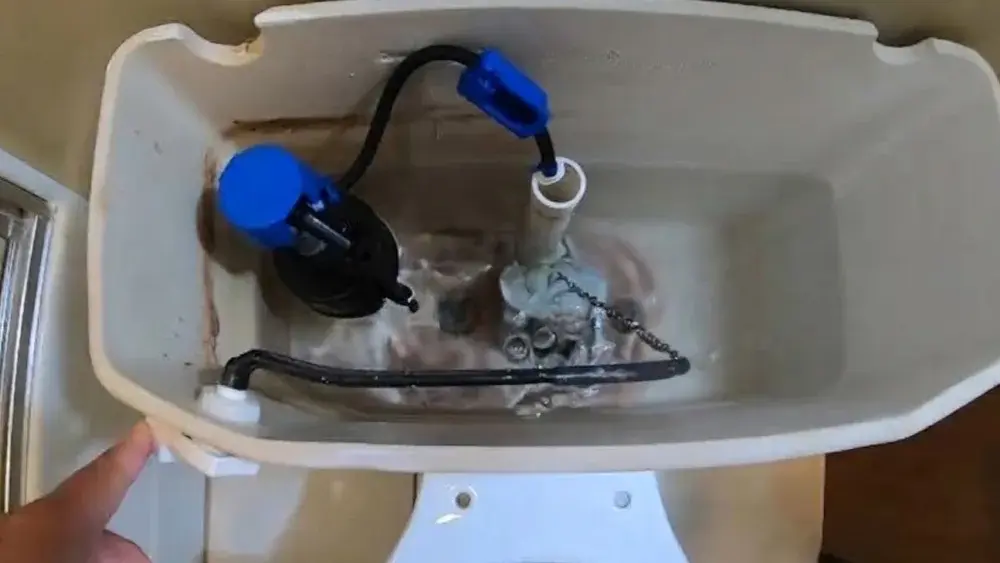
The flapper is the rubber seal at the bottom of the tank that lifts when you flush. The fill valve is the tall assembly that refills the tank and shuts off at the right level. When either wears out, the toilet runs, hisses or refills on its own.
This page keeps to the parts inside the tank: how to diagnose the leak, how to swap each part, how to set the water level, and when the problem is bigger than a rubber seal.
Find the culprit with food coloring
Lift the tank lid and drop several drops of dark food coloring into the tank water. Do not flush. Wait fifteen to twenty minutes and look in the bowl. Color in the bowl means water is slipping past the flapper, and no color points toward the fill valve or the overflow tube.
Next, look at the water line. If the level creeps up to the top of the overflow tube and spills, the fill valve is not shutting off. If you can hear a constant hiss with the level normal, the valve seat or diaphragm inside the fill valve may be worn. Anti-siphon fill valves are the type the California Plumbing Code, a UPC-based text, expects in a toilet tank.
Which part is failing and what it costs you in water
| What you notice | Likely part | Typical fix |
|---|---|---|
| Tank refills every so often with no one flushing | Flapper not sealing | Replace the flapper and clean the seat it rests on |
| Constant hiss or trickle into the tank | Fill valve worn | Replace the fill valve, set the height |
| Water runs into the overflow tube | Float or fill valve set too high | Lower the float or replace the valve |
| Flapper looks fine but still leaks | Flush valve seat pitted or scaled | Clean or resurface the seat, or replace the flush valve |
| Handle sticks or chain hangs up | Chain too long or short | Adjust to a little slack, replace if corroded |
A toilet that keeps running wastes water all day. Book a visit if the tank parts swap did not stop it.
Call (855) 575-2890Before you start swapping parts
Close the little valve on the wall behind the toilet, flush, and hold the handle to drain the tank. A sponge handles the last bit.
Parts vary by brand and tank size. The old flapper or valve in your hand is the surest way to buy a match.
Run a finger around the opening. A rough or gritty ring prevents a new flapper from sealing, so wipe it with a nonabrasive pad.
If the wall valve drips or will not turn, stop there. That is a separate repair, and forcing it can cause a leak.
Replacing the flapper in five minutes
Unhook the chain, slip the old flapper's ears off the pegs on the overflow tube, and pull it free. Fit the new one on the same pegs, clip the chain to the handle arm with just a little slack, and set the flapper so it drops squarely onto the seat. Open the supply slowly and watch it fill.
If the old flapper is warped, sticky or covered in a black residue, replace it with a new one made of the same style. Residue that rubs off on your fingers means the rubber is breaking down and will not seal for long.
- Chain with about a half inch of play so it does not hold the flapper open
- Match the size, since some tanks take a larger flapper
- Flush twice and watch for a clean, quick seal
Swapping the fill valve and setting the water level
With the tank drained, disconnect the supply line from the underside, hold the valve steady and loosen the lock nut beneath the tank. Lift out the old assembly, drop in the new one at the right height, and tighten the nut by hand plus a small turn. Reconnect the line, refill and adjust the float until the water stops about an inch below the top of the overflow tube.
Check every connection for drips with a dry paper towel. Hand-tight plus a quarter turn is enough, because porcelain cracks if overtightened.
Many fill valves are adjustable by a screw or a clip on the stem, so you can set the height without cutting anything. Flush once after adjusting and confirm the tank stops where you marked it.
When to stop and call
Call a plumber if the shutoff valve will not close, the tank or bowl has a crack, water appears at the base, or the toilet keeps running after new parts are in. A hidden leak elsewhere can produce the same high bill, so our leak detection visits check the house for other loss. For anything beyond the tank, see toilet repair for the full list of fixes.
Tank parts and Oakley's mineral content
The District's latest report puts average hardness at 124 mg/L (range 87 to 150) and pH between 8.0 and 8.6. Moderately hard water leaves mineral crust on valve seats and diaphragms, so a part that fails in a few years may be scale rather than a bad part. When you replace the flapper, wipe the seat and the underside of the fill valve of white deposits.
A silent leak at the toilet can raise a water bill without any obvious sign. If your bill jumps, the District's phone line at (925) 625-3798 is where to ask about unusual usage, and the dye test above takes five minutes.
Frequently asked questions
Use the dye test. Color showing in the bowl means the flapper or seat is leaking. A hiss with no color points toward the fill valve.
Check the flush valve size, usually two or three inches, and the brand. A wrong flapper can leak or flush weakly.
Typically about an inch below the top of the overflow tube, or at the fill line marked inside the tank. The manufacturer's instruction sheet gives the exact level.
Scale on the seat, a twisted chain or a float set too high are the usual culprits. Recheck each one before replacing the parts a second time.
Mineral buildup can shorten the life of seals and diaphragms, but the water here is moderate, so cleaning is often enough to restore a seal.
Customers in Brentwood receive water from the city's own system and should check that city's report for hardness. You can see the towns we visit on our service area page.
If the dye test points to something bigger than a rubber seal, we can sort it out in one visit.
Call (855) 575-2890